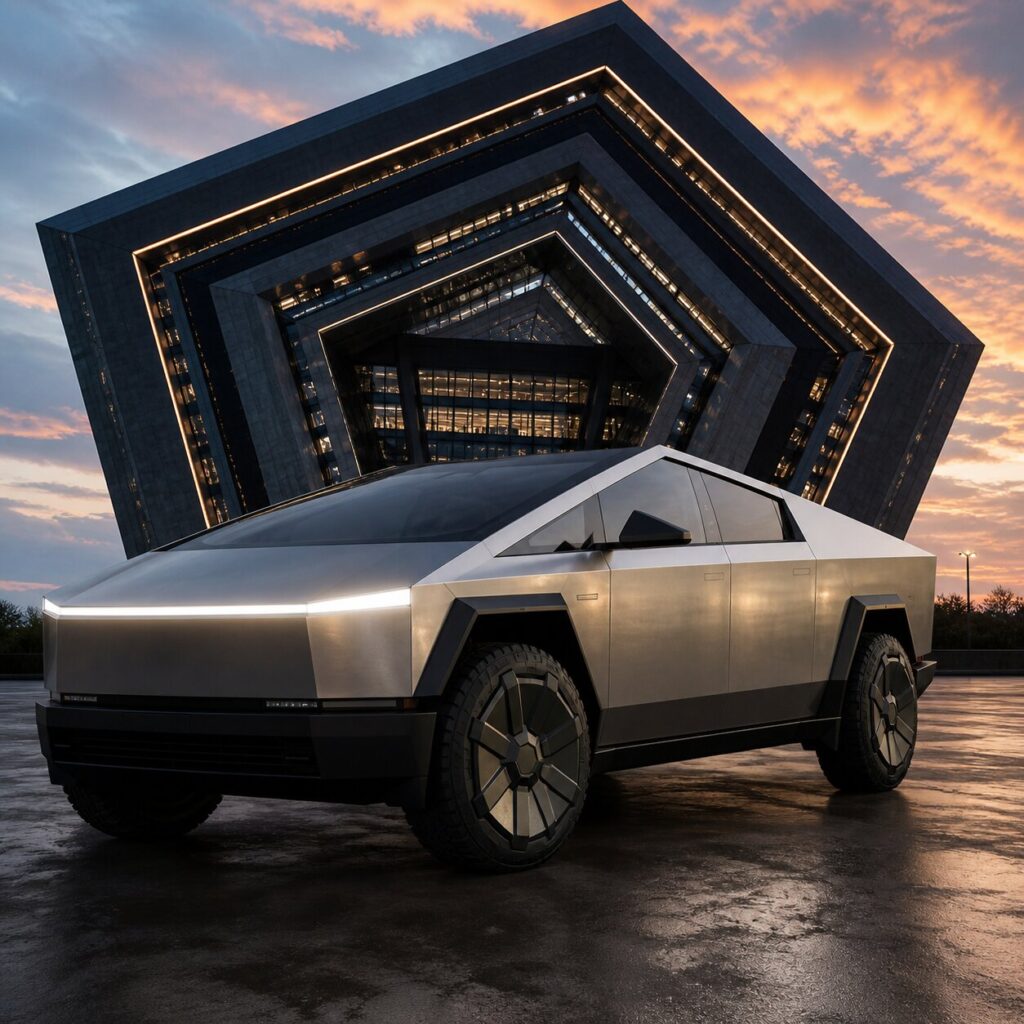
The Tesla Cybertruck is an all-electric, full-size pickup truck designed to disrupt both the consumer vehicle market and commercial fleet operations. Manufactured by Tesla at Gigafactory Texas, this electric vehicle (EV) features a distinctive wedge-shaped, geometric silhouette that departs from traditional truck designs.
For information technology, human resources, and operations managers, the vehicle represents more than a design statement. It serves as a mobile technology hub integrated with automated fleet tracking software, advanced safety features, and a high-voltage electrical architecture. As organizations transition to green fleets to achieve sustainability targets, analyzing this electric truck provides deep insight into how automation and alternative powertrains are reshaping employee mobility, field logistics, and corporate asset management.
How Does the Ultra-Hard Stainless Steel Exoskeleton Enhance Fleet Durability?
A primary operational cost for commercial vehicle operators is body repair and paint maintenance. The vehicle minimizes these expenses by utilizing a cold-rolled 30X stainless steel structural skin instead of a traditional body-on-frame configuration.
Material Properties and Cost Mitigation
- Dent and Scratch Resistance: The exterior alloy resists impact forces that would typically dent standard aluminum or steel door panels.
- Corrosion Prevention: Because the alloy resists environmental oxidation, the vehicle requires no exterior paint or clear coat, removing common surface degradation issues.
- Safety Integration: The impact-absorbent structure works alongside front and rear crumple zones to manage kinetic energy distribution during a collision, keeping passengers safer inside the cabin.
Complementing this external shell is acoustic armor glass. This layered composite panel reduces the likelihood of glass shattering from loose gravel or minor impacts on active job sites, helping reduce vehicle downtime.
What Powertrain Options and Performance Capabilities Are Available for the Tesla Cybertruck?
To help fleet procurement officers select models that meet specific operational demands, Tesla offers two primary configurations of the truck. Both rely on a high-capacity 123 kWh lithium-ion battery system built on an 800-volt electrical architecture.
The dual-motor configuration balances long-distance driving range with payload capacity, making it a natural choice for regional field operations. The premium triple-motor variant, known as the Cyberbeast, utilizes a dual-induction motor setup on the rear axle to maximize power output for heavy-duty pulling, rapid acceleration, and challenging off-road terrains.
How Do Steer-by-Wire and Adaptive Air Suspension Improve Ride Dynamics?
Operating a full-size pickup truck in tight urban environments or crowded construction yards often poses spatial challenges for drivers. Tesla addresses this by removing the mechanical steering column entirely, replacing it with an electronic steer-by-wire system.
Benefits of Electronic Steering Control
- Variable Steering Ratios: At slow speeds, the system increases the steering angle with minimal driver input, making tight U-turns and parking maneuvers much easier.
- Four-Wheel Steering Integration: The rear wheels steer counter to the front wheels at low speeds, shortening the turning radius to just 33.5 feet, which matches the agility of much smaller sedans.
- Active Road Filtering: The electronic actuator dynamically filters out unwanted vibrations from rough roads or gravel surfaces, reducing driver arm fatigue over long shifts.
Additionally, standard adaptive air suspension adjusts the vehicle’s height in real time. It lowers the body at highway speeds to reduce wind resistance and maximize battery range, and can raise the chassis to provide up to 16 inches of ground clearance when driving over rugged off-road obstacles.
How Does Tesla Powershare Technology Turn the Truck into a Mobile Grid?
For mobile field teams and remote worksites, access to reliable electrical power is essential. The vehicle includes Tesla Powershare, a bidirectional charging system that eThis integrated power supply removes the need for field crews to haul noisy, gas-powered generators in the truck bed, freeing up cargo space and reducing tailpipe emissions on-site. In addition to powering tools, the bidirectional system can supply up to 11.5 kW of emergency electricity back to a home or field office during a power outage.
What Digital Fleet and Automation Tools Are Built into the Cabin Technology?
The vehicle’s cabin functions as a streamlined digital workspace, built around a central 18.5-inch infinity touchscreen interface alongside a secondary 9.4-inch display for rear passengers.
Because Tesla builds its software architecture in-house, the truck natively handles remote diagnostics, predictive maintenance alerts, and seamless over-the-air (OTA) updates. This native connectivity allows corporate fleet managers to track location data, energy efficiency metrics, and safety alerts through centralized API portals without needing third-party hardware trackers.
Furthermore, Tesla’s camera-based driving assistant assists operators during long highway drives, lowering stress and improving overall situational awareness on the road.
Frequently Asked Questions About the Tesla Cybertruck
What is the maximum payload and cargo bed capacity of the vehicle?
The truck features a 6-foot-by-4-foot cargo bed made from a tough sheet-molded composite material that does not require a bed liner. It offers 56.2 cubic feet of secure space beneath a motorized, lockable tonneau cover, and supports a maximum total payload capacity of 2,500 pounds.
How fast can the battery pack recharge at a public station?
Using a high-power DC fast charger, the vehicle’s 816-volt battery architecture can pull up to 250 kW of peak power. This allows the truck to add roughly 136 miles of driving range in 15 minutes, keeping route disruptions to a minimum.
What factory warranties apply to commercial fleet operators?
Tesla provides a standard 4-year or 50,000-mile basic bumper-to-bumper vehicle warranty. The high-voltage lithium-ion traction battery and the drive units are protected by a separate 8-year or 150,000-mile warranty that guarantees the battery will maintain at least 70% of its original capacity across that period.read more:hr tech news today