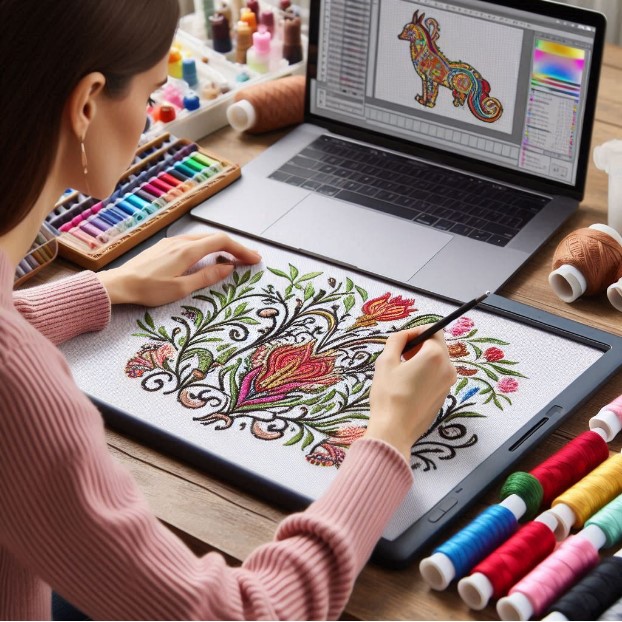
Turning artwork into embroidery is not just about clicking a button. It is a step-by-step process. The goal is to turn a flat image into clean stitches on fabric. This takes care, planning, and a bit of skill.Many people think any design can go straight to a machine. That is not true. Some changes are always needed. If you skip them, the final stitch can look messy or broken.In this guide, I will show you simple and real methods that help you prepare artwork in the right way. These steps come from real work with embroidery files and machines.If you want to go deeper into the setup side, you can also learn how to Digitize Artwork for Embroidery. It helps you understand how designs are turned into stitch files before production starts.
Why Artwork Needs Preparation
Not all artwork is ready for stitching. A design on screen may look perfect, but fabric behaves differently.
What changes in embroidery
- Lines become thread
- Colors become thread blends
- Shapes become stitch paths
This means adjustments are always needed.
Start with Clean Artwork
Good embroidery starts with good design.
Keep it simple first
Simple designs always stitch better.
Best design features
- Clear shapes
- Bold lines
- Few small details
Avoid these
- Thin strokes
- Heavy gradients
- Tiny text
These often get lost in stitches.
Remove Extra Details
Artwork often has effects that do not work in embroidery.
Clean up your file
Before you move forward, simplify it.
Things to remove
- Shadows
- Glow effects
- Tiny patterns
- Blurry edges
Embroidery machines cannot copy digital effects well.
Use High Quality Images
If your artwork starts as an image, quality matters a lot.
Always use clear files
Low quality images cause problems later.
Good file types
- PNG
- SVG
- AI files
Avoid
- Blurry JPEGs
- Low resolution images
Clear images give better stitch results.
Convert Colors Properly
Embroidery uses thread, not screen colors.
Match thread colors
You need to convert digital colors into thread shades.
Simple method
- Use thread charts
- Match closest color
- Keep color count low
Too many colors can slow down production.
Simplify Shapes
Complex shapes are hard to stitch.
Make shapes easy
Break down complex art into simple parts.
Tips
- Use bold outlines
- Remove tiny curves
- Merge small parts
Simple shapes stitch more cleanly.
Think About Stitch Type
Each part of artwork needs a stitch plan.
Choose the right stitch
Different areas need different stitches.
Common choices
- Satin stitch for text and edges
- Fill stitch for large areas
- Running stitch for fine lines
Good stitch choice improves final look.
Set Proper Stitch Direction
Stitch direction affects how smooth the design looks.
Why direction matters
It controls thread flow and shine.
Best practice
- Follow shape curves
- Avoid sharp direction shifts
- Keep flow natural
This makes embroidery look more professional.
Control Stitch Density
Density is very important in embroidery files.
Keep balance
Too dense makes fabric stiff. Too light makes gaps.
Simple rule
- Light for small details
- Medium for normal areas
- Avoid heavy buildup
Always test on fabric.
Plan Underlay Carefully
Underlay is the base of stitches.
Why it is needed
It supports the top stitches and keeps shape stable.
Common types
- Edge walk
- Zig-zag
- Center walk
Do not overuse underlay.
Match Design to Fabric
Fabric choice changes everything.
Different fabric behavior
- Cotton: stable and easy
- Stretch fabric: moves a lot
- Thick fabric: needs strong settings
Adjust your design
Always match stitch settings with fabric type.
Test Before Final Output
Testing is a must step.
Always run sample
Never skip this step in real production.
What to check
- Stitch clarity
- Fabric pull
- Color accuracy
Fix issues before final run.
Avoid Tiny Details
Small details often fail in embroidery.
Keep designs readable
If something is too small, it may disappear.
Better approach
- Increase size slightly
- Merge tiny elements
- Focus on bold design
Use Proper Scaling
Scaling affects stitch quality.
Do not stretch blindly
If you scale wrong, stitches break.
Safe scaling tips
- Recalculate stitches after resizing
- Avoid extreme size changes
- Keep proportions same
Organize Stitch Order
Order matters in embroidery.
Plan step by step
Good stitch order reduces thread breaks.
Suggested flow
- Background fill
- Main shapes
- Details
- Text
Keep Design Balanced
Balance makes embroidery look neat.
Why balance is important
It avoids heavy or uneven look.
Simple tips
- Keep equal spacing
- Center main elements
- Avoid crowding
Real Experience Tips
From real production work, one thing is clear. Most problems come from rushing the setup.
What I learned
- Clean artwork saves time
- Simple designs stitch better
- Testing prevents waste
Even small changes in setup can improve final quality a lot.
Common Mistakes to Avoid
Many beginners repeat the same errors.
Mistake 1: Over-detailing
Too many details get lost in stitches.
Mistake 2: Skipping testing
This leads to wasted fabric and thread.
Mistake 3: Wrong stitch type
Wrong choice can ruin the whole design.
Tools That Help
Good tools make the process easier.
Useful tools
- Vector design software
- Embroidery digitizing software
- Thread color charts
- Test fabric samples
These tools improve accuracy.
Why Preparation Matters
Preparation is the base of good embroidery.
What good prep gives you
- Clean stitches
- Less machine error
- Faster production
- Better final look
Without preparation, even good designs fail.
Final Thoughts
Making artwork ready for embroidery is not hard, but it needs care. You must clean the design, simplify details, and plan stitches well. Each step matters.
Do not rush the process. Take time to prepare your artwork properly. Test often and adjust when needed.
With practice, you will learn how to turn simple designs into clean and professional embroidery work.