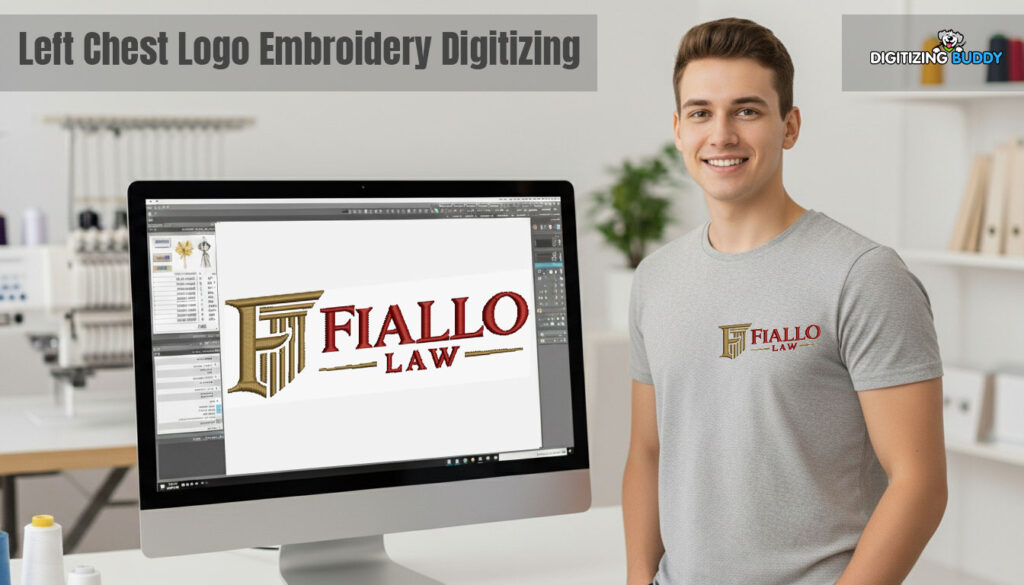
Chest logo embroidery is one of the most common styles in apparel branding. You see it on shirts, polos, jackets, and uniforms. It looks simple, but getting it right takes skill and care. A clean chest logo can make a brand look strong and professional. A bad one can do the opposite.In this guide, I will share easy steps and real tips from hands-on work. These steps will help you get neat and sharp results every time.If you want to go deeper into setup and design prep, you can also check this guide on Left Chest Logo Embroidery Digitizing. It explains the base process in a simple way before you start stitching.
What Makes Chest Logo Embroidery Special
Chest logos are small but very important. They sit right on the front of clothing. This means people notice them first.
Why it matters
- It shows brand identity
- It gives a professional look
- It builds trust in uniforms
Even a small mistake can be easy to see.
Start with a Clean Design
Before you stitch anything, your design must be clear.
Keep it simple
Simple logos work best on the chest area.
Good design traits
- Clear shapes
- Bold lines
- Easy to read text
Avoid these
- Too many details
- Thin lines
- Complex effects
Small chest space does not support heavy design work.
Size Matters a Lot
Chest logos are small by nature. But size still needs balance.
Find the right fit
A logo that is too big looks odd. One that is too small becomes unreadable.
General size idea
- Width: 2.5 to 4 inches
- Height: depends on shape
Always test size before final stitching.
Pick the Right Stitch Type
Stitch type affects how the logo looks on fabric.
Satin stitch works best
Satin stitch is smooth and clean. It is perfect for most chest logos.
Why it works well
- Sharp edges
- Clean finish
- Good for small shapes
Use fill stitch carefully
Fill stitch is for large areas. It can make small logos heavy.
Control Stitch Density
Density means how close stitches are.
Keep it balanced
Too much density makes fabric stiff. Too little makes it weak.
Simple rule
- Light to medium density works best
- Adjust for fabric type
Always test before final run.
Underlay Is Very Important
Underlay is the hidden base stitch. It supports the top layer.
Why you should not skip it
- Keeps shape stable
- Stops fabric pull
- Improves sharpness
Best choices
- Edge walk underlay
- Light zig-zag underlay
Do not make it too heavy.
Choose the Right Fabric
Fabric changes everything in embroidery.
Know your material
Different fabrics behave differently.
Common fabrics
- Cotton: easy to work with
- Polyester: smooth and strong
- Knit: stretchy and tricky
Each one needs different settings.
Stabilizer Makes a Big Difference
Stabilizer holds the fabric in place.
Use the right type
Without stabilizer, designs shift or wrinkle.
Types to use
- Tear-away for stable fabric
- Cut-away for stretchy fabric
Add extra layers for better support.
Thread Choice Matters
Thread gives color and shine to your logo.
Use quality thread
Cheap thread can break or fade.
Good choices
- Polyester thread for strength
- Rayon thread for shine
Pick colors that match your brand.
Needle Size and Type
Needles help bring your design to life.
Small details need small needles
Big needles can damage fine logos.
Recommended sizes
- 65/9 or 70/10 for small designs
Change needles often for clean work.
Placement Is Key
Chest logo placement must be exact.
Standard position
The left chest area is most common. It gives a balanced look.
Placement tips
- Keep equal distance from center
- Align with shoulder seam
- Keep it straight
Even a small shift can look wrong.
Machine Speed Control
Speed affects stitch quality.
Slow and steady wins
Fast speed can cause mistakes.
Best practice
- Use medium speed
- Slow down for small text
- Watch first few stitches
Test Before Final Stitch
Testing saves time and fabric.
Always run a sample
Never skip this step.
What to check
- Stitch clarity
- Fabric pull
- Logo balance
Fix issues before final production.
Common Problems and Fixes
Even skilled users face issues.
Problem: Letters look messy
Fix: Increase spacing and reduce density
Problem: Fabric wrinkles
Fix: Add stabilizer or reduce tension
Problem: Thread breaks
Fix: Slow machine speed and check needle
Real Experience Tips
From real production work, I learned one thing clearly. Small changes make big differences.
What helps most
- Always test first
- Keep settings written down
- Do not rush production
Every fabric behaves in its own way. Experience helps you adjust faster over time.
Tools That Make Work Easier
Good tools improve results.
Helpful tools
- Embroidery digitizing software
- Hoop frames for stable hold
- Quality threads and needles
Good tools save time and reduce errors.
Why Clean Chest Logos Matter
A chest logo is not just decoration. It is branding.
What a clean logo shows
- Professional work
- Strong identity
- Attention to detail
People often judge quality by small details.
Final Thoughts
Creating perfect chest logo embroidery is not hard, but it needs care. You must focus on design, size, stitch type, and fabric. Each step plays a role.
Do not rush the process. Take time to test and adjust. Even small improvements can make a big difference in the final look.
With practice, you will learn how to make clean, sharp, and professional chest logos every time.