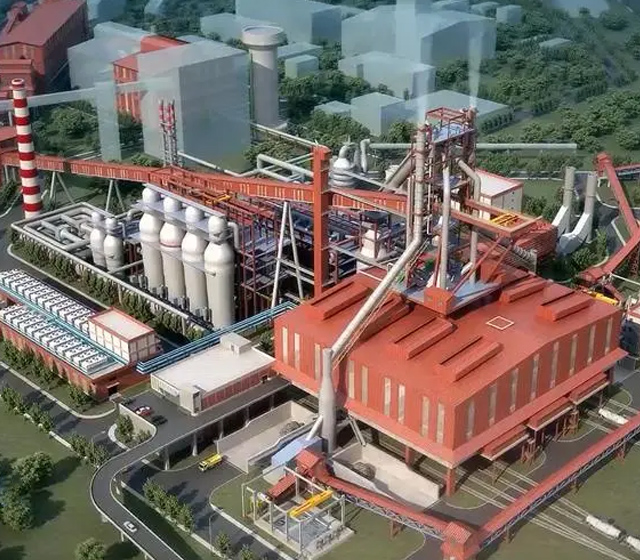
In the rapidly evolving landscape of Industrial Internet of Things (IIoT), smart manufacturing, and large-scale infrastructure monitoring, the ability to ingest, process, and analyze massive volumes of timestamped data in real-time has become a critical competitive advantage. Organizations are increasingly turning to a distributed time series database open source solution to handle the unprecedented velocity and volume of telemetry data generated by sensors, machines, and distributed systems. By leveraging these specialized storage engines, enterprises can transform raw streams of information into actionable operational insights, optimizing maintenance schedules, improving energy efficiency, and enhancing overall system reliability.
Understanding the Architectural Requirements of Time-Series Data
Time-series data is fundamentally different from standard relational data. It is characterized by high-frequency writes, infrequent updates, and analytical queries that span wide time ranges. Standard relational databases often struggle to maintain performance as data points accumulate into the billions or trillions. To combat this, purpose-built databases utilize unique data structures—such as Log-Structured Merge-trees (LSM-trees)—and advanced compression algorithms specifically designed to minimize storage overhead while maximizing throughput.
A robust architecture must prioritize write availability and read efficiency. When deploying at the edge or within a cloud-native environment, the database must support horizontal scalability, allowing administrators to add nodes dynamically as the data ingestion rate increases. This ensures that the system remains responsive even under extreme load, providing a consistent foundation for real-time monitoring and historical trend analysis.
Navigating the Selection Process for Data Infrastructure
Choosing the best open source time series database involves evaluating how well a solution balances technical performance with ease of integration into existing ecosystems. A superior platform will offer high-level query languages that simplify the extraction of complex patterns, such as sliding window averages, trend detection, and anomaly identification. These features are essential for engineers who need to perform deep diagnostics without writing thousands of lines of boilerplate code.
Furthermore, the integration capability with existing visualization tools and data processing frameworks is paramount. Modern teams often require a seamless pipeline that connects sensor inputs directly to dashboards and alerting engines. By selecting a platform that emphasizes native compatibility with standard APIs and protocols, organizations reduce their technical debt and accelerate the time-to-market for new analytical applications.
The Operational Advantages of Specialized Storage
The primary benefit of adopting a purpose-built system is the drastic reduction in storage costs. Because time-series data is time-stamped and sequential, it possesses high redundancy that traditional databases cannot effectively exploit. Specialized systems use delta-of-delta encoding and other sophisticated techniques to shrink the storage footprint by a significant margin. This efficiency means that historical data, which is often valuable for long-term predictive modeling, can be kept accessible for much longer periods without needing massive hardware investment.
Additionally, these systems are designed for high availability. In a distributed setting, data replication ensures that even if a single node fails, the data remains accessible and the ingestion pipeline continues uninterrupted. This fault tolerance is non-negotiable for critical infrastructure environments where data gaps can lead to significant operational risks.
Empowering Digital Transformation with Open-Source Innovation
For businesses embarking on their digital transformation journey, selecting an open-source tsdb provides the transparency and community-driven innovation necessary to stay ahead of the curve. Unlike proprietary software, these solutions offer the flexibility to modify code, audit security protocols, and integrate custom plugins that meet specific industrial requirements. This level of control allows developers to fine-tune the engine’s behavior to match the unique characteristics of their sensor network.
Beyond the technical flexibility, the community ecosystem surrounding these tools fosters the development of extensive documentation, tutorials, and community support. This ecosystem accelerates the learning curve for new team members and ensures that as the business expands, the underlying data architecture is supported by a large community of practitioners who are constantly refining the technology to handle newer, more complex use cases.
Advanced Analytical Capabilities and Future-Proofing
Modern data management is no longer just about storage; it is about intelligence. The latest generation of tools incorporates advanced mathematical functions directly into the query layer. This enables users to perform complex statistical analysis, such as linear regression or Fourier transforms, directly on the raw data stream before it even reaches the application layer. By shifting this computational burden closer to the storage layer, the overall latency of the analytics pipeline is drastically reduced, enabling faster reaction times to system anomalies.
Furthermore, future-proofing is achieved through modular design. As storage technologies evolve—such as the transition from standard solid-state drives to new memory-class storage—a well-architected system will allow for hardware-agnostic deployments. This ensures that the initial investment in the data platform continues to pay dividends for years, as the system can adapt to evolving hardware capabilities without requiring a complete rewrite of the data ingestion layer.
Best Practices for Scaling and Deployment
Successful deployment starts with proper schema design. While time-series databases are flexible, defining efficient tag sets and field keys is crucial for maintaining query performance. Tags should represent metadata that will be used for filtering, such as device ID, location, or machine model, while fields represent the actual measurement values. Keeping the tag cardinality under control is a best practice that prevents the database index from ballooning, ensuring that queries remain lightning-fast even as the system grows to handle millions of unique sensor streams.
Finally, managing the lifecycle of data through automated retention policies is essential for large-scale operations. By automatically downsampling older data—where fine-grained second-by-second measurements are converted into hourly averages—the system keeps the most detailed data for immediate operational needs while retaining high-level trends for long-term strategic planning. This layered approach to data management maintains system performance and keeps infrastructure costs sustainable.
Conclusion
The selection and implementation of a robust data engine are foundational to the success of any data-intensive enterprise. By prioritizing a distributed time series database open source, organizations gain the scalability, efficiency, and flexibility required to manage the massive influx of sensor data inherent in the modern industrial era. Leveraging the best open source time series database ensures that engineering teams can focus on innovation rather than infrastructure maintenance. Ultimately, committing to a reliable open-source tsdb provides a path toward sustained operational excellence and deeper data-driven insights. As industries continue to connect more devices and increase the complexity of their monitoring requirements, the strategic importance of these specialized storage solutions will only continue to grow.