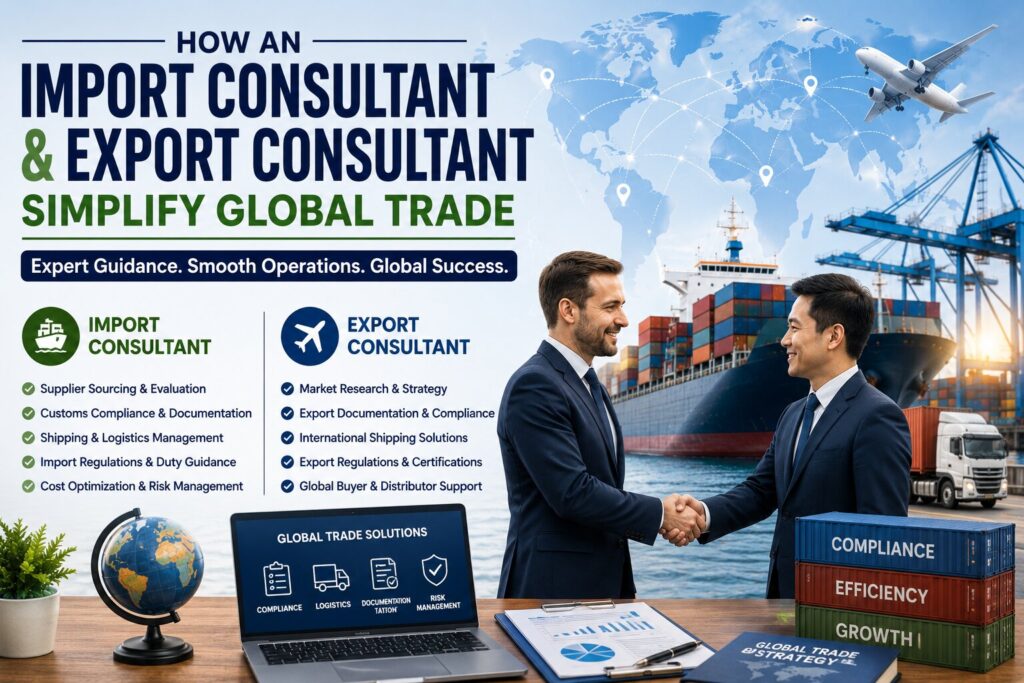
Global trade has transformed the way businesses operate. Companies are no longer limited to local markets because products, services, and suppliers can now move across borders faster than ever before. Businesses of every size are importing raw materials, exporting finished products, and building partnerships in international markets to stay competitive.
While global trade creates exciting opportunities, it also introduces many challenges. International shipping, customs procedures, trade laws, supplier management, tariffs, taxes, and compliance requirements can quickly become difficult to manage without the right expertise.
This is where an import consultant and export consultant play an important role. Businesses involved in international trade often rely on professional guidance to simplify operations, reduce risks, and improve efficiency. These consultants help companies understand global trade processes while supporting long-term growth and smoother international operations.
Whether a business is importing goods, exporting products, or managing both activities together, expert support can make global trade easier and more organized.
This article explains how an import consultant and export consultant simplify global trade and help businesses succeed in international markets.
Understanding the Role of an Import Consultant and Export Consultant
An import consultant helps businesses manage the process of bringing goods into a country. This includes customs compliance, supplier coordination, shipping management, import regulations, and logistics planning.
An export consultant focuses on helping businesses sell and ship products internationally. Their role involves export documentation, trade regulations, market research, shipping coordination, and international business strategy.
Both professionals help businesses manage the complexities of global trade while improving efficiency and reducing operational problems.
Companies often face challenges such as:
- Customs delays
- Documentation errors
- Supplier communication issues
- Compliance risks
- Shipping disruptions
- High logistics costs
- Trade regulation changes
An import consultant and export consultant work together to solve these issues and improve the overall trade process.
Why Global Trade Has Become More Complex
International business has become more competitive and regulated over the years. Governments continue updating trade laws, product standards, customs policies, and compliance requirements.
Businesses involved in global trade must now manage:
- Country-specific regulations
- Product certifications
- Import and export documentation
- Tariff structures
- International taxes
- Supply chain coordination
- Shipping logistics
Without proper knowledge and planning, even small mistakes can lead to delays, penalties, and financial losses.
An import consultant and export consultant help businesses navigate these challenges more effectively.
Simplifying International Trade Procedures
Global trade involves multiple steps and constant coordination between suppliers, freight companies, customs authorities, warehouses, and buyers.
Businesses often struggle to manage all these responsibilities internally.
An import consultant and export consultant simplify trade operations by creating organized systems for:
- Documentation management
- Shipping coordination
- Compliance monitoring
- Logistics planning
- Supplier communication
This organized approach improves workflow efficiency and reduces confusion.
Simplified operations allow businesses to focus more on growth and customer satisfaction instead of operational problems.
Helping Businesses Stay Compliant
Compliance is one of the most important parts of international trade. Every country has unique rules regarding imported and exported products.
Failure to follow these regulations can lead to:
- Shipment delays
- Financial penalties
- Product confiscation
- Legal complications
- Damaged business reputation
An import consultant helps businesses comply with import regulations, while an export consultant ensures products meet export requirements and destination country standards.
These professionals assist with:
- Customs documentation
- Licensing requirements
- Product classifications
- Trade agreements
- Compliance standards
- Restricted goods regulations
Strong compliance practices reduce operational risks and improve international business reliability.
Reducing Customs Delays
Customs clearance problems are common in international trade. Incorrect paperwork or missing documents can delay shipments for days or even weeks.
These delays can create serious problems such as:
- Increased shipping costs
- Inventory shortages
- Missed deadlines
- Customer dissatisfaction
An import consultant and export consultant help businesses prepare accurate shipping documents and maintain compliance before goods move across borders.
This proactive support reduces customs delays and improves delivery performance.
Faster customs clearance also strengthens supply chain efficiency.
Supporting Better Supplier Management
International trade depends heavily on reliable suppliers. Businesses that work with overseas manufacturers or distributors must maintain strong communication and quality standards.
Managing suppliers from different countries can become difficult because of:
- Language barriers
- Cultural differences
- Time zone challenges
- Quality control issues
An import consultant helps businesses identify reliable suppliers and improve supplier relationships.
Support may include:
- Supplier verification
- Contract review
- Production coordination
- Quality assessments
- Risk evaluation
Reliable suppliers help businesses maintain consistent operations and product quality.
Improving International Shipping Efficiency
Shipping products internationally requires detailed planning and coordination.
Businesses must choose the right:
- Transportation methods
- Freight partners
- Shipping routes
- Packaging systems
Poor shipping management often results in:
- High freight costs
- Damaged products
- Delayed deliveries
- Inventory problems
An import consultant and export consultant help businesses create efficient logistics strategies based on budget, product type, delivery schedules, and destination requirements.
Efficient shipping systems improve customer satisfaction and reduce operational stress.
Helping Businesses Reduce Costs
International trade involves many expenses, including customs duties, freight charges, insurance costs, taxes, and storage fees.
Businesses without trade experience often overspend because of inefficient processes or poor planning.
An import consultant and export consultant identify opportunities to reduce unnecessary expenses through:
- Better shipping strategies
- Efficient packaging methods
- Reduced customs penalties
- Improved inventory management
- Freight cost optimization
Lower operating costs improve profitability and business competitiveness.
Improving Risk Management
Global trade always carries risks. Political changes, economic instability, shipping disruptions, and regulatory updates can affect business operations.
An import consultant and export consultant help businesses prepare for these risks through strategic planning.
Risk management support may include:
- Supplier diversification
- Alternative shipping options
- Compliance monitoring
- Inventory planning
- Market risk analysis
Businesses that prepare for uncertainty are more likely to maintain stable international operations during difficult situations.
Supporting Better Financial Planning
International trade affects many financial areas of a business.
Businesses must manage:
- Currency exchange rates
- Customs duties
- Shipping expenses
- Taxes and tariffs
- Insurance costs
Unexpected costs can reduce profit margins and create budgeting challenges.
An import consultant and export consultant help businesses improve financial planning by providing accurate cost analysis and forecasting.
This financial guidance helps companies make smarter purchasing and pricing decisions.
Helping Small Businesses Enter Global Markets
Many small businesses believe international trade is too complicated or expensive for them to manage successfully.
However, small businesses can compete globally with the right support.
An import consultant and export consultant help smaller companies:
- Understand trade regulations
- Manage shipping processes
- Build international strategies
- Reduce operational risks
- Improve supply chain efficiency
Professional guidance helps small businesses enter global markets with greater confidence.
Supporting Product Compliance
Different countries enforce different product standards and safety regulations.
Imported and exported products may require:
- Product certifications
- Safety testing
- Packaging compliance
- Labeling standards
- Inspection approvals
An import consultant and export consultant help businesses understand these requirements before products enter international markets.
Compliance support reduces the risk of customs rejection, penalties, or shipment delays.
Improving Communication Across Borders
International business requires communication with suppliers, freight companies, customs officials, distributors, and customers from different countries.
Miscommunication can lead to:
- Shipping mistakes
- Delayed agreements
- Product errors
- Damaged business relationships
An import consultant and export consultant help businesses improve communication and negotiation strategies.
These professionals often understand international business practices and cultural expectations, which helps businesses build stronger relationships with global partners.
Saving Time for Business Owners
Managing international trade operations requires constant attention.
Business owners often struggle to balance trade responsibilities with marketing, customer service, and daily operations.
An import consultant and export consultant reduce this workload by handling complex trade-related tasks more efficiently.
This may include:
- Customs coordination
- Documentation management
- Supplier communication
- Logistics planning
- Compliance reviews
Time savings allow businesses to focus more on growth and customer relationships.
Strengthening Supply Chain Stability
Supply chain disruptions can negatively affect international business operations.
Delayed shipments, transportation issues, or supplier failures can create inventory shortages and customer dissatisfaction.
An import consultant and export consultant help businesses strengthen supply chains by improving:
- Logistics planning
- Inventory management
- Transportation efficiency
- Supplier coordination
- Risk diversification
Stable supply chains improve operational reliability and customer trust.
Helping Businesses Expand Internationally
Expanding into new international markets requires careful planning and market research.
Businesses need accurate information about:
- Consumer demand
- Local competition
- Pricing strategies
- Industry trends
- Market regulations
An export consultant helps businesses evaluate new market opportunities and develop international growth strategies.
This guidance helps businesses make informed decisions instead of taking unnecessary risks.
Improving Customer Satisfaction
Customers expect timely deliveries, reliable service, and consistent product quality.
International trade problems can quickly damage customer trust.
An import consultant and export consultant help businesses improve operational consistency through better logistics, supplier management, and compliance systems.
Improved operations lead to:
- Faster shipping
- Better communication
- Fewer delays
- Stronger product consistency
Satisfied customers are more likely to become repeat buyers and recommend businesses to others.
Helping Businesses Stay Competitive
Global competition continues increasing across nearly every industry.
Businesses that fail to improve operational efficiency may struggle to compete internationally.
An import consultant and export consultant help businesses strengthen global operations through:
- Better logistics strategies
- Reduced operating costs
- Improved compliance systems
- Stronger supply chain management
- Efficient shipping coordination
Businesses with organized international systems are better positioned for long-term success.
Supporting Better Decision-Making
International trade involves major financial investments and operational risks.
An import consultant and export consultant provide businesses with industry knowledge and practical experience that support smarter decision-making.
Consultants help businesses evaluate:
- Supplier options
- Market opportunities
- Shipping methods
- Risk management strategies
- Trade compliance requirements
Professional guidance reduces uncertainty and improves operational confidence.
The Growing Importance of Trade Consultants
As international trade becomes more complex, businesses increasingly recognize the value of expert guidance.
An import consultant and export consultant are no longer important only for large multinational companies. Businesses of all sizes now rely on professional support to manage global trade more effectively.
Companies continue hiring consultants because they help:
- Simplify operations
- Improve efficiency
- Reduce risks
- Strengthen supply chains
- Maintain compliance
- Support global growth
The demand for experienced trade professionals continues growing worldwide.
The Future of Global Trade Consulting
Technology continues transforming international trade operations.
Businesses now use digital systems for:
- Shipment tracking
- Customs management
- Inventory control
- Supply chain analysis
- Trade documentation
The future role of an import consultant and export consultant will likely involve even greater use of technology and automation.
However, businesses will still need human expertise for strategic planning, compliance management, and relationship building.
Professional trade guidance will remain essential for businesses involved in global markets.
FAQs
1. What does an import consultant do?
An import consultant helps businesses manage importing processes, customs compliance, shipping logistics, supplier coordination, and trade regulations.
2. What is the role of an export consultant?
An export consultant helps businesses expand into international markets by managing export documentation, shipping, compliance, and market strategies.
3. Why do businesses hire an import consultant and export consultant?
Businesses hire an import consultant and export consultant to simplify global trade, reduce operational risks, improve compliance, and manage international logistics efficiently.
4. How can an import consultant and export consultant improve supply chain management?
An import consultant and export consultant help businesses optimize shipping, manage suppliers, reduce delays, and strengthen global supply chain operations.
5. Can small businesses benefit from import consultant and export consultant services?
Yes, small businesses benefit from import consultant and export consultant services because they provide expert guidance for entering and managing international markets.
Conclusion
Global trade creates incredible opportunities for businesses that want to grow internationally, reach new customers, and improve profitability.
However, managing international trade operations can become highly complicated without proper knowledge and planning.
An import consultant and export consultant help businesses simplify global trade by providing expert guidance on shipping, logistics, compliance, supplier management, and international business strategy.
Businesses that work with experienced consultants can reduce risks, improve efficiency, save time, and strengthen long-term growth.
As global markets continue expanding, the role of an import consultant and export consultant will remain essential for businesses that want to succeed in international trade.