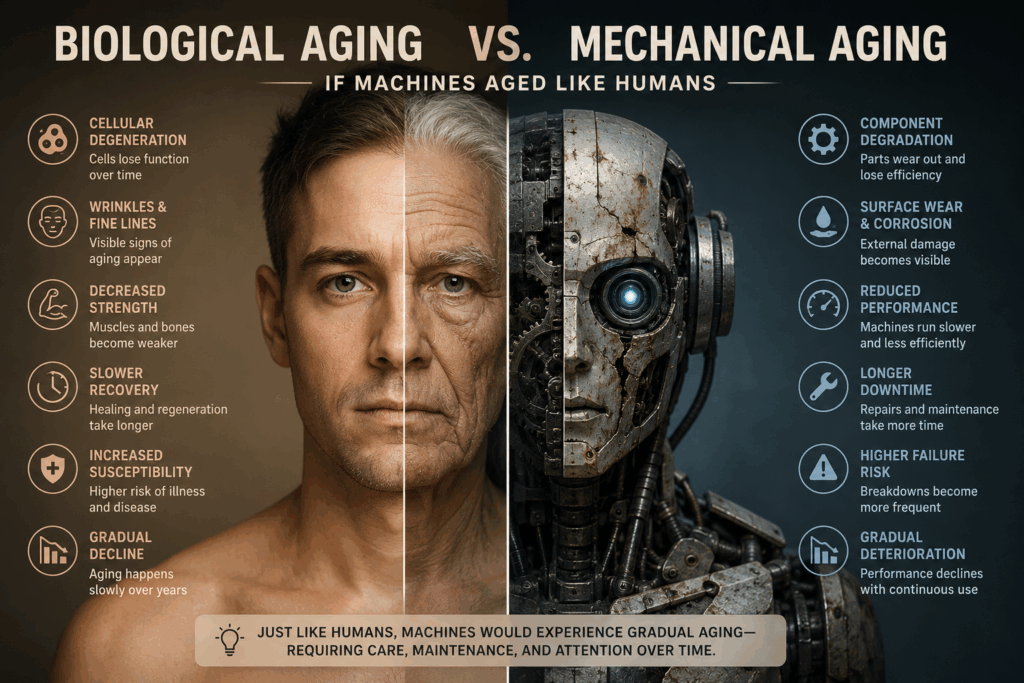
An old construction machine somehow has a feeling that it is more human than people confess. It has an indication of growth, stress, recovery, and decline, just like an individual. When a person examines a machine, he or she reads it in a manner similar to a face. They perceive bruises, sounds, rigidity, and personality changes that are the result of work. A humanistic view of machines brings a better understanding of the real operation of the aging process in machines. All the elements are processed by memory of some sort, and each hour that the operation occurs, it leaves something in its wake. Used heavy machinery reflects its history in a manner that reflects the biological changes that humans undergo as they pass through various life stages. Such a comparison simplifies the process of aging and makes it easier to understand it in a natural way.
The Early Years: Smooth Systems And Unshaken Foundations
The initial days of the machine go on smoothly and confidently. The hydraulics react immediately, the metal surfaces are free of any stress, and the engine breathes freely. The whole structure acts like a young body acts. There is no feeling of overwork, of fatigue, and all machinery works vigorously and distinctly. The movements are seen to be balanced and predictable, and each push, pull, and rotation is coordinated perfectly between power and structure. At this point, a machine has nearly no internal friction other than that which is taken into consideration by the design of the machine. It just takes care of the world with its instinctive power, just as a young human body. That initial prowess predetermines its performance in later years of life, as there are always traces left in the background of the surfaces by the circumstances of its early years.
Middle Age: The Wear And Gradual Decreases
As time passes and the machine works on, it starts experiencing the pressure of the job. The changes initially manifest themselves gradually. Hydraulics, which previously responded instantly, begin to hesitate a little. Metal surfaces that previously have been perfectly aligned start showing minute movements. There is a slight increase in engine cycles and the loss of some sharpness in fuel and air systems. Such transformations are the same turnaround that human beings experience when the body starts to drag in minute ways. The machine works powerfully, yet its responses are of a new tone. It requires a little effort to achieve the same performance. Each hour introduces a degree of inner opposition, and those preliminary symptoms are the beginning of the changes in youthful power to the older phase of life. This is the time that determines the future behavior of the machine, as all the significant aging patterns begin to emerge at this stage.
The Joints Story: Pins, Bushings, And Human Bones
The joints of a machine talk the most when mechanical aging is compared to human aging. Pins and bushings serve the purpose of bones and cartilage in the body. As they begin to loosen or tighten in an uneven manner, it is comparable to the mechanical type of hardened joints or lack of flexibility. The changes in movement are apparent in the manner the machine lifts, rotates, and supports weight. Minor cracks in pins are similar to the manner in which bones move a little after years of compression. Bushings that lose their initial fit will act in a similar manner as cartilage wears out with age. The machine begins to make sounds which give a clue to friction, and the sounds are the same way human joints convey stress with motion. These changes in joints characterize the personality of construction machines. The farther these portions have moved, the older the machine is, the more it speaks of its weariness by its posture, pose, rhythm, and ease of burden.
Capacity To Breathe: Engines Vs. Human Lungs
The engine is the one that does the breathing, just as the lungs do the same for the individual. This breathing system experiences the most evident alterations when a machine becomes old. The obstruction of airflow increases when filters become outdated and internal tubes become congested. The flow of fuel into the chambers has somewhat altered proportions, and the rhythm of combustion is deprived of some of its initial smoothness. An indicator of this mechanical breathing can tell more about this than the gauge can tell. The machine tells us some hints of its age, by the thickness of the smoke, the color of it, and the pulse of it. These are the indications of the breathing system that used to work without any complications, but now is covered by the stratifications of life that have been accumulated. The engine has taken a breath, but it has taken the breath of time, as a man when old age alters the depth, power, and clarity of the lungs.
Skin And Muscle: Frames, Metal Fatigue, And Surface Wrinkles
The skin and muscles of a human being are reflected in the outside of a machine. Frames have stress lines that are similar to wrinkles. Like covered wounds, weld marks are healed scars. Surfaces that are painted gradually wear out like skin that becomes dull. The fatigue of metals is manifested in small distortions and bends, as the muscles do when under constant tension. These marks narrate the tale of all the heavy weights, all the pressure cycles, and all the hours of withstanding the machine provided. Life is recorded in the body of the machine in these layers, and every mark is an indication of a moment of effort. When one runs a hand over the frame, he or she experiences what a human face depicts as it grows old. These alterations on the surface form a physical memory, which provides the machine with an apparent personality that appears as a result of time.
Heart And Circulation: Arteries, Blood, And Hydraulics
Fluids act in the machine like blood. Oil possesses protective power just like blood possesses oxygen. The aging of oil makes it lose its viscosity, take a darker color, and contain minute pieces that flow through each system. The change is comparable to the stress of toxins and pressures of time on human blood. Hydraulic fluid flows in the manner of a circulatory system, and once it becomes irregular in pressure or consistency, the whole machine will experience this slowness. These fluids are pumped and circulated by the heart-like parts, such as pumps and internal chambers, with difficulty. As those pumps become old, the rhythm is altered. Dampeners or peaks in pressure say the same thing as a heart that is aging and straining all it can to keep the blood flowing evenly. Any alteration in these fluids will impact the movement, lifting, and breathing capacities of the machine with the same comfort as before.
Final Thoughts
Later in the life of a machine, it is determined by its condition based on the amount of care it received along the way. A machine which experienced a moderate life grows old gracefully. Its systems are not slow in moving, and its structure is not shaken under stress. The other machine can enter late life with stress signs that manifest themselves in each movement. Such disparities are like the human aging process, which depends on health, habits, and care. A machine that is often maintained keeps up with the strength of critical systems. It has a kind of wisdom in its manners and pride in its body in its survival. A machine that is not maintained will reach to limit much faster and convey more visible signs of exhaustion. At this phase, all the sounds, all the movements, and all the vibrations bear the truth of their lifetime.