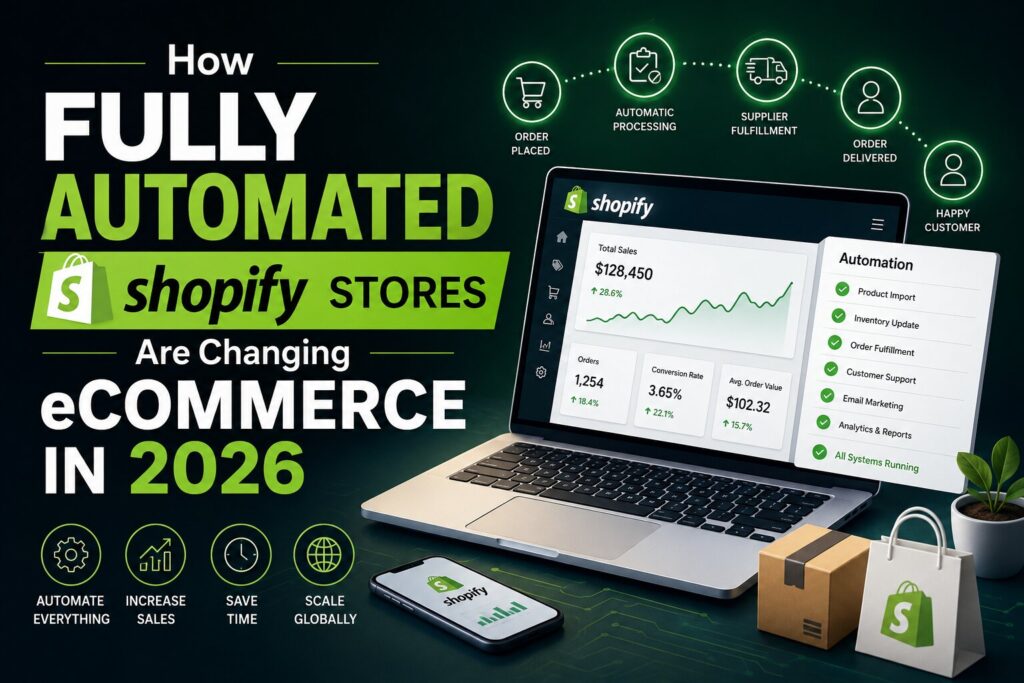
The eCommerce industry has changed faster in the last few years than many experts expected. Consumer habits are evolving, online competition is growing, and store owners now face higher expectations from customers who want fast delivery, personalized experiences, and smooth shopping journeys. In the middle of these changes, one business model has become a major talking point in 2026: the fully automated Shopify store.
Many entrepreneurs once believed that running an online store required endless manual work. Tasks like product research, inventory management, order fulfillment, customer support, pricing updates, and marketing consumed hours every day. Today, automation tools and smart workflows are changing that reality.
Modern sellers now use shopify dropshipping automation to simplify operations, reduce repetitive tasks, and create more scalable businesses. Instead of spending every hour handling small operational details, store owners can focus on growth strategies, branding, and customer experience.
This shift is not just a trend. It represents a major transformation in how eCommerce businesses operate in 2026.
In this article, we will explore how fully automated Shopify stores are reshaping the online retail world, why automation matters more than ever, the benefits and challenges involved, and what the future holds for automated eCommerce businesses.
Understanding the Rise of Fully Automated Shopify Stores
A fully automated Shopify store is an online business that uses automation systems to handle many daily operations with minimal manual involvement. Automation tools manage tasks that once required constant attention.
These systems can automate:
- Product imports
- Inventory updates
- Order processing
- Tracking information
- Customer emails
- Price monitoring
- Marketing campaigns
- Retargeting ads
- Sales reporting
- Customer support workflows
In 2026, automation technology has become more advanced and more accessible. Small businesses and solo entrepreneurs can now use tools that were once available only to large companies.
This growth explains why shopify dropshipping automation has become one of the most discussed strategies in modern eCommerce.
Why Automation Became Essential in 2026
The online marketplace is more competitive than ever. Thousands of new stores launch every day, and customers expect quick service from every business they visit.
Store owners who still rely heavily on manual work often struggle with:
- Slow order processing
- Inventory errors
- Customer service delays
- Missed sales opportunities
- Inconsistent marketing
- Burnout from repetitive tasks
Automation solves many of these problems by creating faster and more organized workflows.
In 2026, customers expect:
- Real-time order tracking
- Fast responses
- Personalized shopping experiences
- Accurate inventory updates
- Smooth checkout systems
A fully automated Shopify store helps businesses meet these expectations more efficiently.
The Connection Between Shopify and Automation
Shopify remains one of the most popular eCommerce platforms because it supports integrations with thousands of apps and automation systems.
This flexibility allows sellers to connect tools that automate almost every part of the business.
For example, store owners can automate:
Product Sourcing
Automation tools can import products directly from suppliers into Shopify stores. Product details, pricing, and images update automatically.
Order Fulfillment
When customers place orders, systems can send the order information directly to suppliers without manual processing.
Inventory Management
Automation software updates stock levels in real time, helping prevent overselling.
Email Marketing
Automated email sequences help stores recover abandoned carts, promote products, and build customer loyalty.
Customer Support
AI-powered chat systems and automated help desks now answer common questions instantly.
These features make shopify dropshipping automation highly attractive for modern entrepreneurs.
How Fully Automated Shopify Stores Save Time
Time is one of the biggest advantages of automation.
Traditional eCommerce businesses often require store owners to spend long hours handling repetitive tasks. Automation reduces this workload dramatically.
A fully automated Shopify store can process hundreds of orders with very little human involvement. Instead of manually confirming each order, the system handles fulfillment automatically.
This time savings allows business owners to focus on:
- Brand building
- Marketing strategies
- Product research
- Customer experience
- Business expansion
In 2026, efficiency matters more than ever. Businesses that save time can grow faster and respond to market changes more effectively.
The Impact of Shopify Dropshipping Automation on Small Businesses
Small business owners benefit greatly from automation because they usually operate with limited resources.
Many entrepreneurs start with small budgets and cannot hire large teams. Automation gives them access to systems that help them compete with bigger brands.
A solo entrepreneur can now run a fully automated Shopify store that handles thousands of monthly orders using automation tools.
This creates new opportunities for:
- Beginners entering eCommerce
- Side hustlers
- Digital nomads
- Small startups
- Freelancers building online income streams
Automation lowers the barrier to entry while increasing scalability.
Improved Customer Experience Through Automation
Customer experience plays a major role in eCommerce success. Online shoppers have many choices, so businesses must provide smooth and reliable service.
Automation helps improve customer satisfaction in several ways.
Faster Order Processing
Automated systems send orders to suppliers immediately after purchase, reducing delays.
Real-Time Tracking Updates
Customers receive automatic shipping updates and tracking numbers.
Personalized Recommendations
Automation tools analyze customer behavior and recommend relevant products.
Automated Customer Communication
Email systems keep customers informed about orders, promotions, and updates.
Reduced Human Error
Automation minimizes mistakes in inventory, shipping, and pricing.
A fully automated Shopify store can create a smoother shopping experience while reducing operational stress.
The Role of Artificial Intelligence in Automated Stores
Artificial intelligence has become a major part of shopify dropshipping automation in 2026.
AI-powered systems now assist with:
- Product recommendations
- Dynamic pricing
- Customer support
- Sales forecasting
- Ad targeting
- Inventory predictions
- Fraud detection
AI helps store owners make smarter decisions based on real-time data.
For example, AI tools can identify trending products before competitors notice them. They can also optimize advertising campaigns automatically based on customer behavior.
This technology gives fully automated Shopify stores a major competitive advantage.
Why Entrepreneurs Prefer Fully Automated Shopify Stores
Many entrepreneurs choose automation because they want flexibility and scalability.
A traditional business often demands constant attention. Automated stores allow owners to operate more efficiently from anywhere in the world.
Benefits include:
- Lower operational stress
- Better time management
- Easier scaling
- Reduced manual workload
- Improved organization
- More consistent operations
This flexibility attracts entrepreneurs who value location independence and long-term business growth.
The Evolution of Dropshipping in 2026
Dropshipping itself has evolved significantly.
Years ago, many dropshipping stores struggled with poor customer experiences, long shipping times, and low-quality products. In 2026, automation and supplier improvements have changed the landscape.
Modern shopify dropshipping automation systems now support:
- Faster supplier communication
- Better inventory synchronization
- Advanced shipping tracking
- Improved product sourcing
- Automated returns management
As a result, many automated stores now provide experiences similar to traditional retail businesses.
Marketing Automation Is Changing Online Selling
Marketing is one of the most powerful uses of automation in eCommerce.
Store owners no longer need to manually send every email or manage every campaign individually.
Automation tools can now:
- Send abandoned cart emails
- Segment audiences automatically
- Launch retargeting ads
- Schedule social media posts
- Recommend products based on browsing behavior
- Analyze customer engagement
A fully automated Shopify store can maintain consistent marketing efforts even while the owner focuses on other areas of the business.
This creates better customer engagement and stronger long-term growth.
Inventory Management Has Become Smarter
Inventory issues can damage customer trust quickly.
Overselling products leads to cancellations, refunds, and negative reviews. Automation reduces these risks.
Modern inventory systems update stock levels instantly across multiple suppliers and sales channels.
This is especially important for businesses using shopify dropshipping automation because supplier inventory changes frequently.
Accurate inventory management helps stores:
- Avoid overselling
- Reduce refund requests
- Improve customer satisfaction
- Maintain better organization
Automation makes inventory tracking far more reliable in 2026.
Data Analytics Helps Store Owners Make Better Decisions
Successful eCommerce businesses rely heavily on data.
Automation systems now provide advanced reporting tools that help store owners understand customer behavior and sales performance.
Analytics dashboards can track:
- Conversion rates
- Customer lifetime value
- Product performance
- Ad campaign results
- Traffic sources
- Cart abandonment rates
A fully automated Shopify store gives owners access to valuable insights without requiring manual reporting.
This data-driven approach helps businesses grow more strategically.
The Financial Benefits of Automation
Automation can improve profitability in several ways.
Lower Labor Costs
Businesses need fewer employees to manage repetitive tasks.
Faster Operations
Efficiency increases overall productivity.
Reduced Errors
Fewer mistakes mean fewer refunds and operational losses.
Better Marketing Performance
Automated campaigns improve customer targeting and conversion rates.
Easier Scaling
Businesses can handle more orders without dramatically increasing workload.
For many entrepreneurs, shopify dropshipping automation creates a more sustainable business model.
Common Misconceptions About Fully Automated Shopify Stores
Some people believe automation means zero work. This is not accurate.
A fully automated Shopify store still requires:
- Strategic planning
- Product research
- Branding decisions
- Marketing oversight
- Customer relationship management
- Performance monitoring
Automation reduces repetitive work, but business owners still need to guide overall strategy.
Another misconception is that automation guarantees instant success. In reality, successful stores require patience, testing, and continuous improvement.
Automation improves efficiency, but it does not replace smart business decisions.
Challenges of Shopify Dropshipping Automation
Although automation offers many benefits, challenges still exist.
Supplier Reliability
Poor suppliers can create shipping delays and customer complaints.
Technical Issues
Automation systems sometimes experience errors or integration problems.
Market Competition
Many sellers now use automation, increasing competition in some niches.
Customer Expectations
Consumers expect high-quality service and fast delivery.
Dependence on Software
Businesses relying heavily on automation must ensure their systems remain updated and functional.
Understanding these challenges helps entrepreneurs build more stable businesses.
The Importance of Branding in Automated eCommerce
Automation alone does not create a memorable brand.
In 2026, successful fully automated Shopify stores focus heavily on branding and customer trust.
Strong branding includes:
- Professional website design
- Clear messaging
- Consistent communication
- Quality customer service
- Unique product positioning
Customers are more likely to buy from stores that feel authentic and trustworthy.
Automation handles operations, but branding creates long-term loyalty.
Mobile Commerce and Automation
Mobile shopping continues to dominate eCommerce.
Modern automation systems help stores optimize mobile experiences by:
- Improving checkout speed
- Personalizing recommendations
- Automating SMS marketing
- Simplifying mobile navigation
A fully automated Shopify store must provide a seamless mobile experience to stay competitive in 2026.
Mobile optimization now plays a major role in customer retention and conversion rates.
Automation Helps Businesses Scale Internationally
Global eCommerce growth has created opportunities for international expansion.
Automation tools now support:
- Multi-currency pricing
- International shipping updates
- Language customization
- Global inventory tracking
- International tax settings
These systems make it easier for businesses to serve customers worldwide.
Many entrepreneurs use shopify dropshipping automation to expand into new markets without building large operational teams.
Social Commerce and Automation
Social media platforms have become major sales channels.
Automation now helps stores manage:
- Social media ads
- Influencer campaigns
- Automated responses
- Product tagging
- Audience retargeting
This integration between social commerce and automation helps businesses maintain visibility across multiple platforms.
A fully automated Shopify store can now operate across websites, social apps, and marketplaces simultaneously.
Sustainability and Smarter Operations
Consumers increasingly care about sustainability and ethical business practices.
Automation can help businesses reduce waste through:
- Better inventory forecasting
- Smarter order management
- Reduced overstocking
- Improved shipping coordination
While automation alone does not guarantee sustainability, it helps businesses operate more efficiently and responsibly.
Customer Retention Is Easier With Automation
Acquiring new customers is expensive. Retaining existing customers is often more profitable.
Automation tools now support customer retention through:
- Loyalty programs
- Personalized offers
- Follow-up emails
- Automated discounts
- Subscription reminders
A fully automated Shopify store can maintain ongoing communication with customers without manual effort.
This strengthens customer relationships and improves repeat purchase rates.
Security and Fraud Prevention in 2026
Online fraud remains a challenge for eCommerce businesses.
Modern automation systems now include advanced fraud detection tools that analyze purchasing behavior and flag suspicious activity.
Security automation helps businesses:
- Reduce chargebacks
- Protect customer information
- Identify risky transactions
- Improve payment security
As online shopping continues to grow, security automation becomes increasingly important.
The Future of Shopify Dropshipping Automation
Automation technology continues to evolve rapidly.
Future developments may include:
- More advanced AI personalization
- Predictive inventory management
- Voice-commerce integration
- Smarter customer service systems
- Automated video marketing
- Real-time pricing optimization
As technology improves, fully automated Shopify store will likely become even more efficient and intelligent.
Businesses that adapt early may gain significant advantages in the competitive eCommerce market.
Why Human Creativity Still Matters
Despite automation growth, human creativity remains essential.
Automation can handle repetitive tasks, but humans still drive:
- Brand storytelling
- Emotional marketing
- Product selection
- Customer relationships
- Creative strategies
Successful businesses combine automation with human insight.
The best fully automated Shopify store owners use technology to improve efficiency while maintaining authentic customer connections.
Tips for Building a Successful Fully Automated Shopify Store
Entrepreneurs interested in automation should focus on long-term business quality rather than shortcuts.
Important strategies include:
Choose Reliable Suppliers
Strong supplier relationships improve customer satisfaction.
Focus on Branding
A professional brand builds trust and repeat customers.
Monitor Automation Systems Regularly
Even automated systems require supervision.
Prioritize Customer Experience
Fast responses and clear communication remain essential.
Analyze Store Data
Use analytics to improve performance continuously.
Stay Updated on Trends
eCommerce changes quickly, and adaptability matters.
These practices help businesses remain competitive in a rapidly evolving market.
The Human Side of Automated eCommerce
Many people worry that automation removes the human element from online business. In reality, automation often allows entrepreneurs to spend more time on meaningful interactions.
Instead of handling repetitive admin tasks all day, store owners can focus on:
- Building customer communities
- Improving products
- Creating better content
- Developing stronger brands
Automation supports business growth by removing unnecessary operational pressure.
FAQs
What is a fully automated Shopify store?
A fully automated Shopify store is an online store that uses automation tools to manage tasks like product imports, inventory updates, order fulfillment, customer emails, and marketing campaigns with minimal manual work. These systems help store owners save time and operate more efficiently.
How does shopify dropshipping automation work?
Shopify dropshipping automation works by connecting your Shopify store with suppliers and automation apps. When a customer places an order, the system automatically forwards the order to the supplier, updates tracking details, and manages inventory in real time.
Is a fully automated Shopify store profitable in 2026?
Yes, a fully automated Shopify store can be profitable in 2026 when managed correctly. Success depends on choosing the right products, building a strong brand, using reliable suppliers, and creating a positive customer experience.
What are the benefits of shopify dropshipping automation?
Shopify dropshipping automation offers several benefits, including faster order processing, reduced manual work, improved inventory management, better customer communication, and easier business scaling. It also helps entrepreneurs focus more on growth strategies instead of repetitive tasks.
Do fully automated Shopify stores require daily management?
Even though automation handles many tasks, store owners still need to monitor performance, review analytics, improve marketing strategies, and maintain customer satisfaction. Automation reduces workload but does not completely eliminate management responsibilities.
Can beginners start a fully automated Shopify store?
Yes, beginners can start a fully automated Shopify store because many automation tools are user-friendly and easy to integrate with Shopify. However, learning basic eCommerce principles and understanding customer behavior remain important for long-term success.
Conclusion
The eCommerce industry in 2026 looks very different from just a few years ago. Automation has changed how online businesses operate, scale, and compete.
A fully automated Shopify store is no longer just an experimental idea. It has become a practical business model that helps entrepreneurs manage operations more efficiently while improving customer experiences.
From inventory management and order fulfillment to AI-driven marketing and customer retention, automation now plays a central role in modern eCommerce success.
At the same time, businesses still need human creativity, strategic thinking, and authentic branding. Automation works best when combined with strong leadership and customer-focused decision-making.
As technology continues to evolve, shopify dropshipping automation will likely become even more advanced. Businesses that learn how to balance automation with genuine customer connection will be better positioned for long-term success.
The future of eCommerce is not about replacing people with technology. It is about using technology to build smarter, faster, and more customer-friendly businesses.