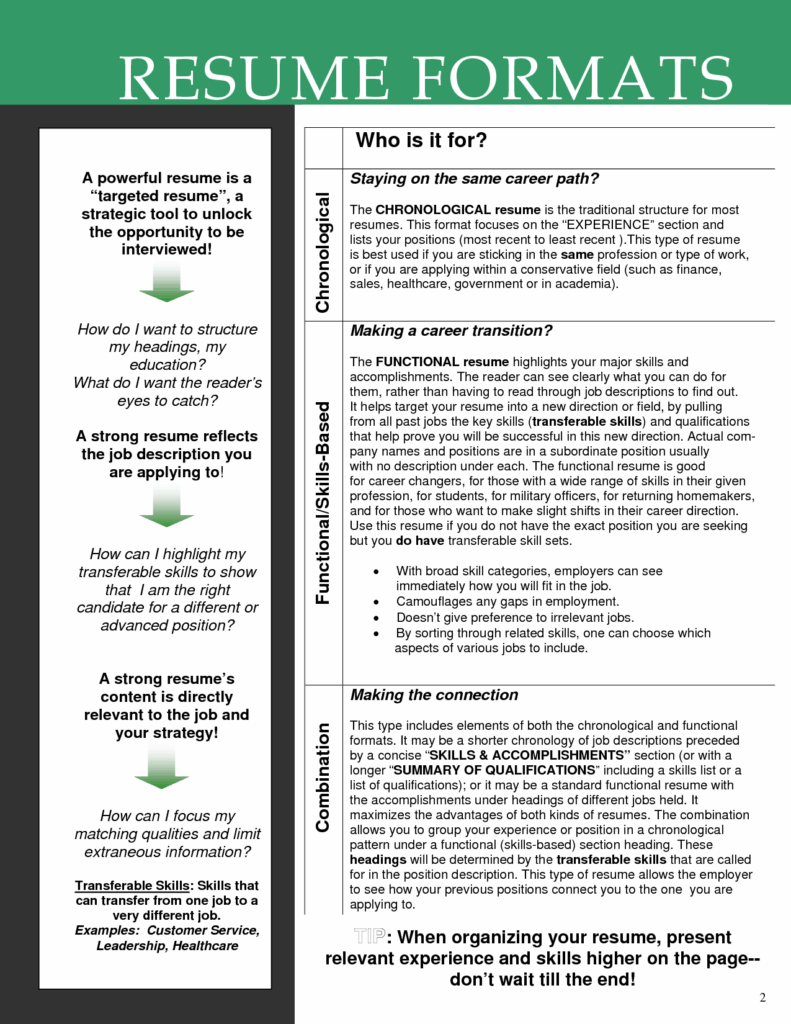
A resume is not merely a sheet of paper containing a list of education, work experience and skills. It is an expert marketing solution, which presents a candidate to employers, prior to the actual interview. The recruiters are not given a lot of minutes to go through every resume in a competitive job market and hence, anything that is not relevant and important should be terse and bold. As an attempt to make a resume effective, different career professionals focus on 5 Ps of a resume i.e., Purpose, Presentation, Precision, Proof and Personalization. These five elements help job seekers to create a document that is appealing, yet meaningful and result oriented.
Knowing the 5 P’s can be a significant difference between a resume that is disregarded and one that opens up interview opportunity. All the Ps have a certain role to play in terms of rendering the resume professional, targeted and persuasive.
Purpose
The Purpose is the first P of a resume. All resumes must have a purpose. The candidate should be aware of the kind of job he/she is seeking and what information he/she wants to convey to the employer before composing a resume. A general, weak and unfocused resume is a typical outcome of an unfocused resume. It can be loaded with information but it does not clearly show why the candidate will be good in the job.
In a purposeful resume the resume is built around the job you want. It brings out the most pertinent experience, skills, qualifications and achievements. As an example, in a situation where a person is looking to get a job in the field of marketing, the resume should focus on campaign management, social media strategy, branding, customer engagement, and measurable results of marketing. In cases where the applicant is seeking an administrative position, they should question whether it is the same person being applied and then focus on organization, communicating, reporting, scheduling and coordination of the office.
Irrelevant information is also filtered out using purpose. It is a common mistake of many job seekers to add all they have ever done. Nonetheless, a powerful resume does not have to entail all the details. It must contain the appropriate details. When the intention is known, the resume stands out as more convincing and easier to read by the recruiters.
Presentation
The second P is Presentation. The resume might have been poorly formatted and this may reduce the effectiveness of a candidate who may be very experienced. Presentation is defined as the general look of the document, layout, structure and readability. A resume should be presentable, clean, professional and well-organized.
A simple format is the start of good presentation. The headings should be clear, the spacing should be even and font should be easily readable. The recruiter can become bored easily by a bulky resume. On the one hand, a well formatted resume will guarantee good first impression and professionalism.
Order of information is also included in presentation. The most crucial sections required by recruiters should be on their fingertips. A resume is usually started with contact data, a professional summary, skills, work experience, education, certifications and other data. The work experience should usually precede the education in case of people with a lot of experience in their profession. Academic projects and education may be earlier in the case of fresh graduates.
Unnecessary graphics, garbled designs and colors should also not be used in writing a professional resume unless it is done in a field of creativity. The idea is to ensure that the resume is appealing and not too eye-catching. An excellent presentation is not an overload of the information, it enriches it.
Precision
Precision is the third P. An effective resume should be concise, straight forward and specific. Recruiters have no time to speculate on what an applicant is up to. The words that are not distinct can work against the resume, and some specific language will fortify it.
Precision is employing power action words and details. Instead of saying that they are the ones in charge of sales, a better way to say it would be to improve sales by 20 percent each month through following up on clients and showing them the product. This will offer the employer a clear understanding of what the candidate has achieved. A resume is more persuasive when there are numbers, percentages, time frames and outcomes.
Accuracy also means that we should not have long and convoluted sentences. The language in the resumes should be professional and comprehensible. Value added to every sentence should be added. In cases where a sentence is not able to persuade that candidate is the right candidate, then it should be either removed or reformulated.
Hardworking, team player and good communication skills are other generic phrases that are frequently used by job seekers. Such are generic statements, and not very strong by themselves, unless they are accompanied by examples. Rather than merely stating that the candidate is a team player, the candidate can provide an example of when he or she worked with a team to accomplish a project, solve a problem or enhance the results.
Proof
Proof is the fourth P. Employers desire to see that a candidate will be able to perform. A resume needs to do more than to state abilities, it must demonstrate them through the accomplishments, experience and quantifiable results. That is why, one of the main points in resume writing is proof.
Evidence can be of different types. It may be sales growth, reduction in cost, projects completed, awards, promotions, client satisfaction, improvement of processes or good leadership responsibilities. With managed a team, one would say that, but managed a team of 10 employees and saved project delivery time by 15 percent is much more effective.
In the process of writing the resume, the other factor that most professionals will be comparing their resumes with those in the market or the resume writing services to know how they can best show their achievements is the resume writing process. However, no matter which person writes the resume with their own hands or employed the services of a professional, pure and relevant evidence should always be in the first place.
Accuracy is also evidence. The information in dates, job titles, company names, qualifications and contact information must be correct. Any error would take a toll on the mind of the employer. It is also recommended that a resume should not be inflated and falsified as this can turn out to be quite harmful to professional integrity.
Personalization
Personalization is the fifth P. Not all jobs require a similar resume. In situations where the job titles are the same, various employers are after different attributes. Personalization is defined as adjustment of the resume to the job description and the needs of the company.
In order to personalize the resume, the candidate is recommended to carefully read the job advertisement and take notes so as to know the main competencies, responsibilities and requirements of the job. The resume is then to be updated in such a way that it reflects such points in a natural way. This does not imply the word-to-word copying of the job description. It entails demonstrating how the experience of the candidate is what the employer requires.
It is especially important to personalize as the majority of companies have Applicant Tracking Systems, also known as ATS. These systems are applied to scan resumes based on key words and subsequently it is read by a human recruiter. Without the resume containing appropriate keywords on the job description, then the resume may not pass through the next stage. With a tailor-made resume, there is an increased chance of going through the ATS filters and attract the attention of the recruiter.
Personalization is diligent as well. When an employer notices that a resume fits in the position, he/she is given the impression that the candidate is not wasting the opportunity. A general resume will be irresponsible as compared to a customized resume which will be professional and focused.
The importance of the 5 P’s.
The 5 P’s of a resume are integrated to make a good and complete document. The resume is directed by the purpose. Due to presentation, it is aesthetically professional. The language is succinct and powerful because of accuracy. Evidence develops trust. Personalization relates the resume to the job.
The five elements can be applied in a proper way to transform the resume, not into a list of responsibilities. It renders it a powerful career document that is value communicating. Employers are not only interested in what a candidate has accomplished, but how the candidate can contribute something to his company. The 5 Ps will help to answer the question.
Conclusion
A resume has 5 P, namely, Purpose, Presentation, Precision, Proof and Personalization. These principles can empower job applicants to compose resumes that are precise, concise, and professional. A targeted resume is dedicated towards the correct position. Well presented resume seems to be well laid out and readable. An accurate resume has precise and clear language. Evidence in a resume illustrates evidence of achievement. An individualized resume is in line with the interests of each employer.
Nowadays, great competition in the work market requires more than just experience. The applicants should be familiar with the manner in which they should be able to put forth their experience. Using the 5 Ps, job seekers can enhance the quality of their resume, and have better chances to be invited to an interview. A good resume is not a history of a career; it is a career statement that shows value, self-confidence and readiness to the next challenge.